Three Market Developments That Matter to Real Estate Investors
A practical look at the financing, supply, and credit conditions shaping real estate decisions and the questions investors should be asking.
6MIN READ
UPDATED: AUGUST 2026
FFI RESEARCH & EDUCATION
THE BRIEF
Financing structure remains central to underwriting.
THE BRIEF
Slowing multifamily construction could support selected markets over time.
THE BRIEF
Uneven lending conditions make leverage and risk management especially important.
THE LARGER POINT
The current environment does not support broad conclusions. It rewards selectivity, realistic assumptions, and disciplined structure.
01
Interest Rates Remain an Important Part of the Investment Equation
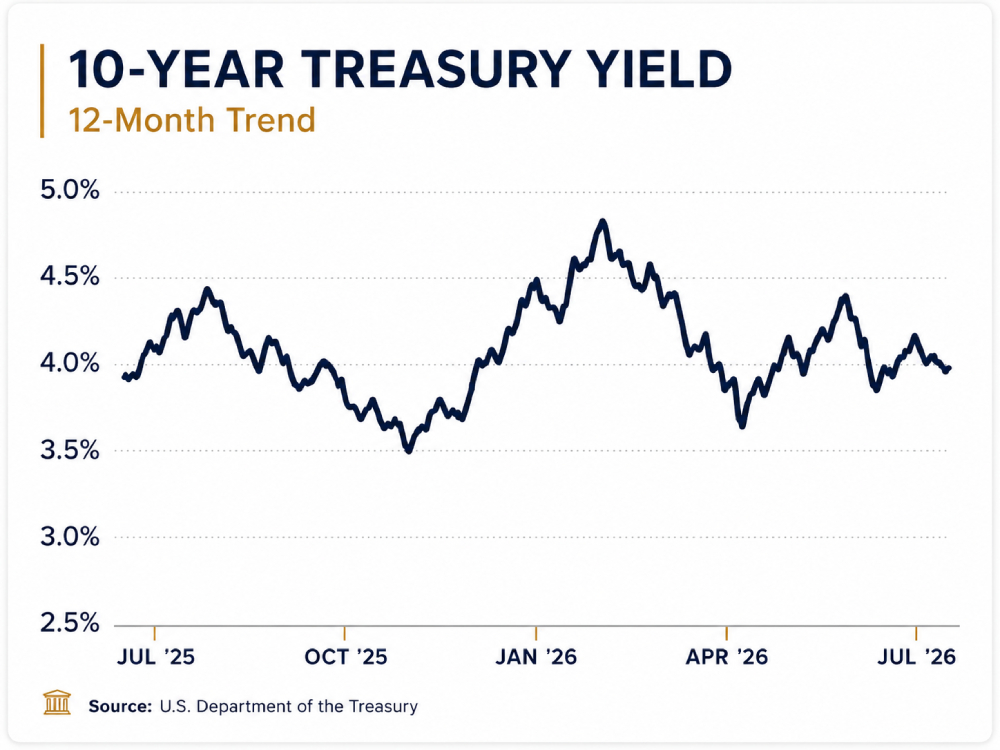
As of June 2026, market-implied 10 year Treasury yields remain near the upper end of the 3.5% to 4.25% range. The Federal Reserve has held the federal funds rate steady in the 4.25%-4.50% range while monitoring inflation, labor trends, and overall economic growth
WHY IT MATTERS
Higher rates affect acquisition pricing, refinancing capacity, and investor returns. Even small changes in the rate environment can materially impact cash flow and exit assumptions.
INVESTOR TAKEAWAY
Stress-test deals using higher interest rate assumptions and conservative exit cap rates. Favor floating or shorter-duration debt when appropriate and maintain liquidity to navigate volatility,
INVESTOR CONSIDERATIONS
Focus on borrower spreads over base rates
Prioritize fixed rate or variable rate debt with rate caps
Build in interest rate buffers into underwriting
Review interest expense coverage under stress scenarios
Maintain liquidity for funding needs and reinvestment flexibility
02
New Multifamily Construction Is Slowing
U.S. Census Bureau data show multifamily starts (5+ units) have declined meaningfully from the 2022 peak. Many markets are now seeing a more measured pace of new supply coming online.
WHY IT MATTERS
Slower supply growth may benefit selected markets by reducing future competition and supporting occupancy and rent stability over time.
INVESTOR TAKEAWAY
Focus on markets with favorable demand-supply balance, employment trends, and limited new construction pipelines. Asset-level execution remains critical.
POTENTIALLY CONSTRUCTIVE
Population & job growth
Limited future deliveries
Healthy occupancy
Reduced concessions
Barriers to new development
POTENTIAL WARNING SIGNS
Large existing pipeline
Slowing household formation
Elevated concessions
Weak absorption
High operating-cost growth
03
Real Estate Credit Requires Continued Discipline
Lenders continue to emphasize risk management and underwriting discipline. Access to credit varies widely by property type, sponsor strength, and deal structure. Traditional banks remain cautious, while alternative lenders focus on downside protection
WHY IT MATTERS
Financing terms, leverage, and availability directly affect deal feasibility and returns. Conservative structure and strong sponsorship remain key differentiators.
INVESTOR TAKEAWAY
Partner with experienced operators, maintain conservative leverage, and align with lenders and capital partners who prioritize long-term risk management.
CAPITAL STRUCTURE CHECKLIST
Amount & type of financing
Fixed vs. variable rate
Debt-service coverage
Maturity date
Extension options
Refinancing assumptions
Operating breakevens
Payment priority
INVESTOR CONSIDERATIONS
Align leverage with asset stability and cash flow visibility
Stress-test debt-service coverage under multiple scenarios
Evaluate lender flexibility and workout history
Review sponsor track record and capital alignment
Prioritize structures with downside protection
QUESTIONS TO ASK BEFORE EVALUATING A REAL ESTATE INVESTMENT TODAY
Use our practical checklist to help evaluate financing, property fundamentals, and downside scenarios before you invest.
This information is for informational purposes only and does not constitute an offer to sell or a solicitation of an offer to buy securities or investments. Past performance is not indicative of future results.